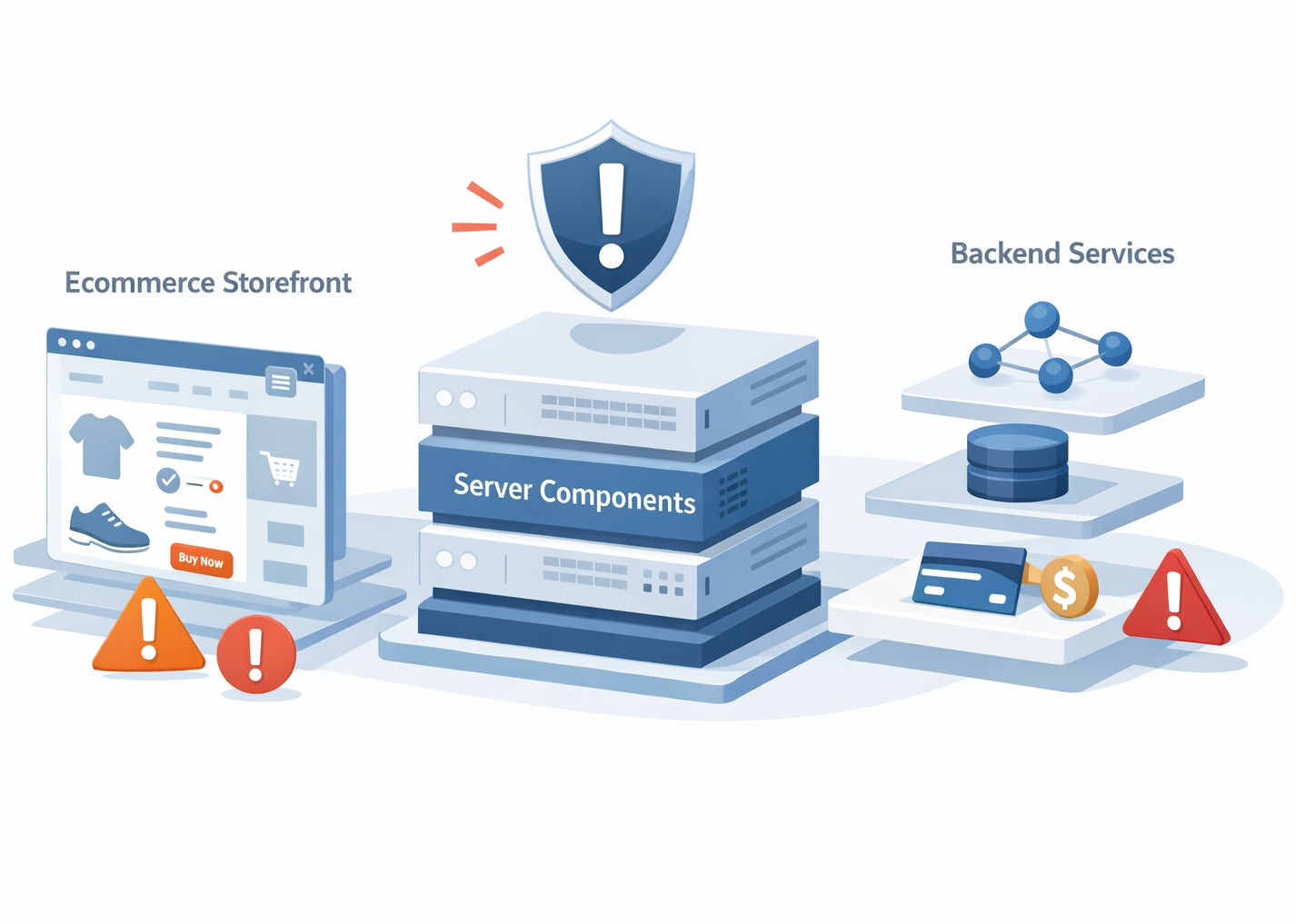
The e-commerce landscape continues to evolve rapidly, with newer platforms and technologies reshaping how businesses sell online. In the midst of this change, the question many store owners and developers ask in 2026 is: Is Magento still relevant? Despite the rise of SaaS solutions and headless commerce trends, Magento — now part of Adobe Commerce — continues to hold a meaningful place in ecommerce, especially for complex, highly customized, and enterprise-level use cases.
In this article, we’ll explore the current state of Magento, where it excels, where it struggles, and how it fits into the broader ecommerce world today. We’ll also refer to recent data and trends that support our conclusions.
What is Magento, and its market position today
Magento is an open-source e-commerce platform that businesses use to build customizable and scalable online stores. Unlike fully hosted SaaS solutions, Magento gives developers full control over hosting, code, customizations, and integrations. This freedom makes it particularly attractive for merchants with complex business rules or unique technical requirements.
According to the most recent statistics:
-
Magento powers over 250,000 online stores worldwide, indicating a significant continued presence.
It holds roughly 8 % of the global e-commerce platform market, placing it among the top five e-commerce systems globally.
A notable portion of large retailers — approximately 20% of the top 1,000 U.S. retailers — rely on Magento for enterprise-level reliability.
These figures may seem modest alongside hyper-growth platforms like Shopify, but they underscore that Magento remains a major choice for brands that need ownership and customization, rather than a one-size-fits-all hosted system.
Why Magento still matters in 2026
1. Deep Customization and Control
Unlike hosted Shopify-style platforms, Magento allows businesses to own their code and infrastructure. This means you can tailor every aspect of the shopping experience — from the checkout flow to backend workflows — without being confined to platform-level constraints.
This level of control is particularly crucial for:
-
complex product catalogs,
-
highly customized pricing logic,
-
multi-storefront management,
-
and seamless ERP/legacy system integration.
For many established brands, such capabilities outweigh the convenience of quick SaaS setups.
2. Strong adoption among mid-market and enterprise brands
Statistics show that Magento is far from a “dead” platform:
-
It powers a significant number of enterprise sites, especially where customization matters.
Some regions — like Germany and the U.S. — demonstrate strong relative adoption rates.
Even with rising competition, this data suggests that Magento continues to serve a distinct niche where flexibility and feature depth are more important than rapid onboarding.
3. Headless and modern architectures
A major trend in e-commerce for 2025–2026 is the rise of headless commerce, where the frontend (what customers see) is decoupled from the backend (where commerce logic lives).
Magento experimented early with PWA through its PWA Studio initiative. However, in recent years, Adobe has reduced its strategic focus on maintaining an official PWA frontend, leaving headless implementations largely in the hands of development teams and agencies.
These architectures help Magento stores stay competitive from a performance and UX perspective, particularly for brands that want to combine backend power with flexible frontend innovations.
4. Focus on B2B commerce
While B2C ecommerce grows steadily, B2B ecommerce is expanding rapidly and demands complex pricing, account hierarchies, and order workflows — areas where Magento’s architecture inherently excels.
Platforms that simplify B2C scenarios often struggle with these advanced requirements, which makes Magento a preferred choice for wholesalers, distributors, and enterprise brands with multi-layered ecommerce needs.
Magento as an alternative to SaaS platforms
One of the most important — and often overlooked — reasons Magento remains relevant is that it represents a fundamentally different philosophy compared to SaaS ecommerce platforms.
SaaS solutions prioritize speed of launch, standardized workflows, and platform-controlled infrastructure. While this approach works well for many businesses, it also introduces structural limitations that become more visible as companies grow.
Common SaaS constraints include:
-
restricted checkout customization,
-
limited control over backend logic,
-
platform-imposed payment rules,
-
API rate limits and feature gating,
-
dependency on platform roadmaps, and policy changes.
Magento, by contrast, operates as a self-hosted and extensible system. Businesses own their infrastructure, codebase, and integrations, allowing them to adapt the platform to their operational reality rather than adapting the business to platform rules.
This distinction has become increasingly relevant as e-commerce platforms expand their control over:
-
checkout flows,
-
payment processing,
-
subscription billing,
-
and merchant risk management.
For companies with complex pricing models, multi-entity B2B structures, or deep ERP integrations, these limitations can become blockers rather than conveniences.
Magento is rarely chosen today because it is “easier” — it is chosen because it removes ceilings imposed by SaaS platforms. In that sense, Magento functions less as a competitor to SaaS solutions and more as a strategic alternative for businesses that prioritize autonomy, long-term flexibility, and architectural control.
Where Magento faces challenges
Despite its strengths, Magento does face real obstacles:
1. Technical overhead and cost
Magento is more resource-intensive than many hosted alternatives. You will generally need a development team or agency support for setup, optimization, and maintenance. This hurdle can be a deterrent for small businesses or startups with limited tech resources.
Specialized hosting is also important, as Magento sites tend to be more resource-hungry than simpler platforms.
2. Competition from simpler platforms
Platforms like Shopify and WooCommerce have gained popularity due to their ease of use and low initial setup costs. Many smaller merchants choose them because they just work out of the box. These solutions continue to grow rapidly, capturing a portion of the e-commerce market that traditionally might have considered Magento, especially for simpler storefronts.
3. Perception of decline
Some industry observers point to trends showing Magento sites decreasing in number on certain technologies, tracking live site counts. This reflects broader market shifts toward hosted or hybrid models.
However, a dip in raw site counts doesn’t necessarily capture revenue volume, enterprise usage, or the complexity of remaining Magento deployments — all areas where Magento remains robust.
Magento in the broader ecommerce context
E-commerce as a whole continues to grow globally, with online retail sales expected to keep rising over the coming years.
A platform like Magento has a role in this ecosystem that is different from hosted solutions — it offers power, ownership, and extensibility at the expense of simplicity.
Platforms with different design decisions — such as SaaS ease or headless API focus — each solve different problems. Magento’s continued use by large and complex brands shows that there remains a strong market segment that prioritizes control and depth over convenience.
Conclusion: Magento’s strength is its purpose
To sum up:
✔ Magento is not dead in 2026 — it’s a mature, capable platform with real usage in enterprise and complex implementations.
✔ It excels where control, customization, and extensibility matter most.
✔ It may not be the fastest choice for fledgling startups, but for brands with non-trivial requirements, it remains relevant.
Choosing the right platform is about aligning your business needs — not following hype. For businesses that require deep customization and enterprise-grade commerce capabilities, Magento remains a compelling choice in 2026 and beyond.
Looking to build or grow your Magento store?
If you want expert help launching or scaling your Magento ecommerce site, contact us, and we’ll guide you through the process — from architecture and development to performance optimization and ongoing support.